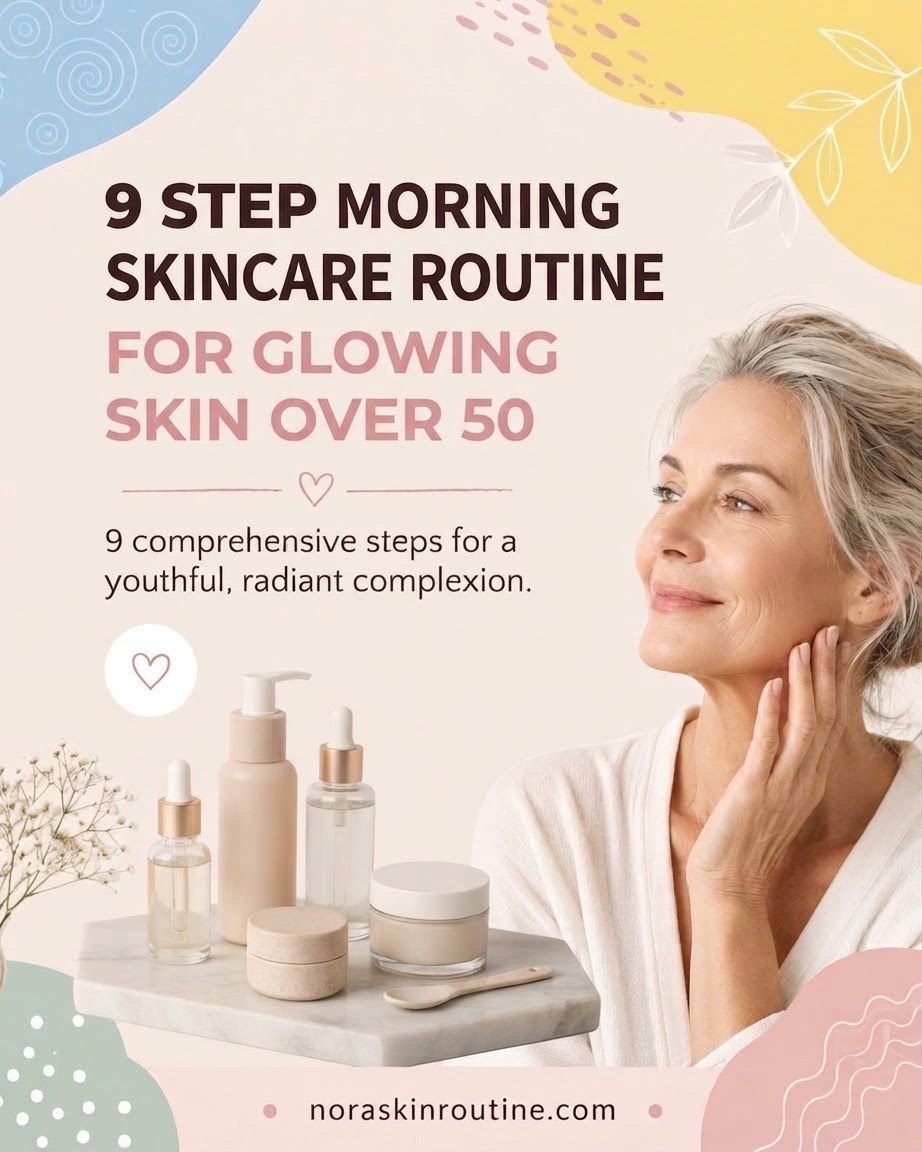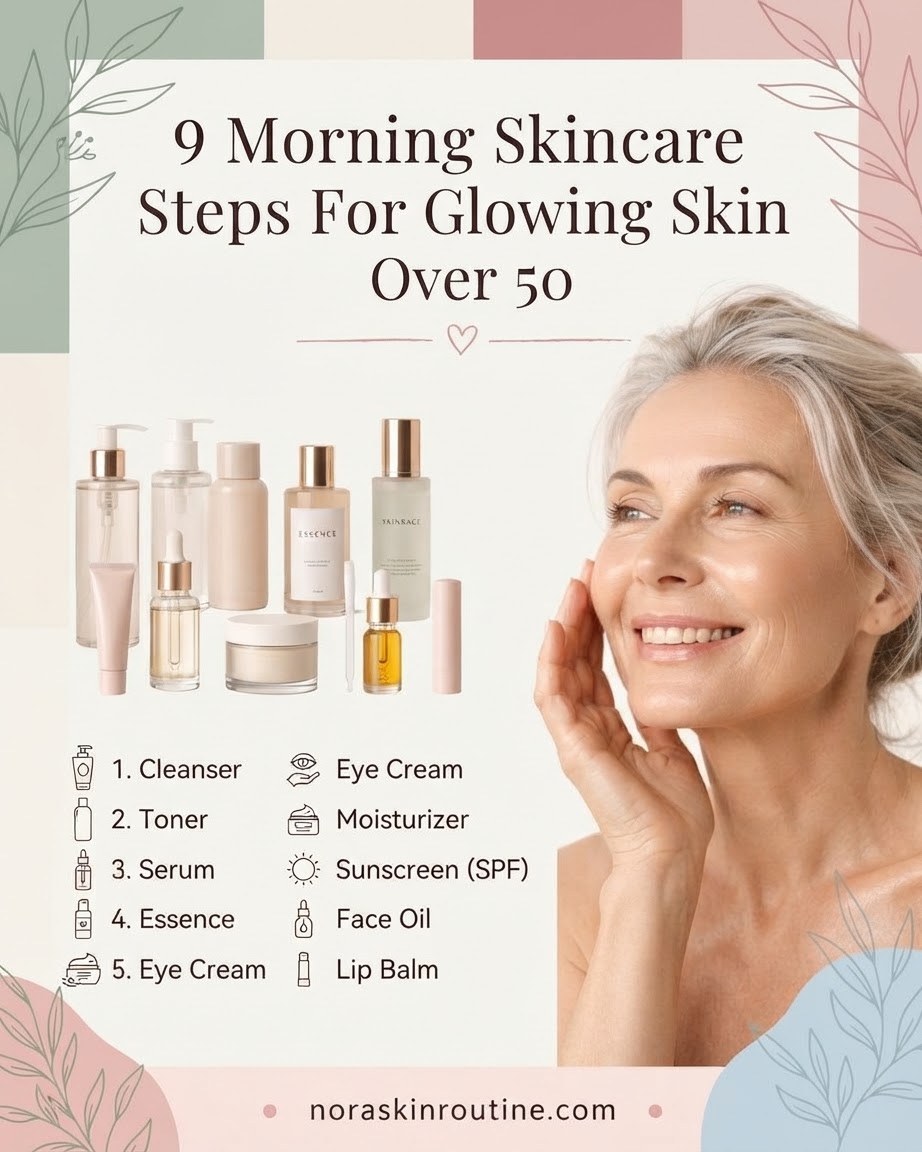
If your skin over 50 feels drier, more delicate, or slower to bounce back than it used to, you are not imagining it, and you are definitely not alone. After nine years of researching skincare for real, busy women, I have learned that the most effective mornings are the ones that stay simple and consistent rather than crowded with too many products. This guide breaks the classic layering method into nine clear steps, from cleansing to sunscreen, so you know exactly what to do, why it matters, and how to adjust it to your own skin.
See the Full Morning Routine at a Glance
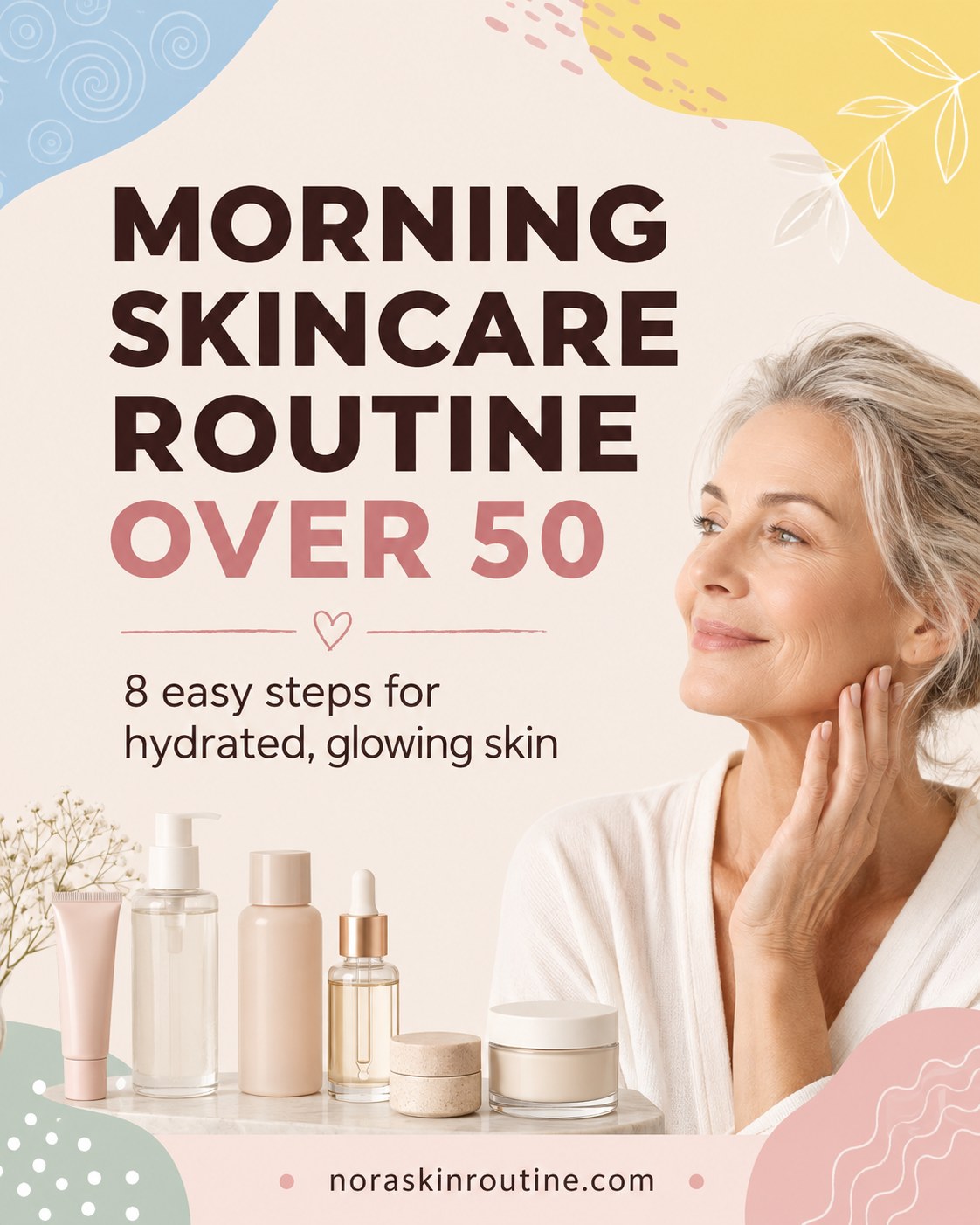
Before getting into each product, it helps to see the whole routine laid out in one place, the way I like to sketch it in my own notebook before a busy morning. This eight-step sequence moves from lightweight to richer textures, which is the order that generally helps products absorb properly rather than sitting on top of each other.
You do not need every single step every day. Think of this as a flexible framework rather than a strict rulebook — some mornings call for the full routine, others only need a cleanse, a hydrating serum, and sunscreen.
- Cleanser to remove overnight buildup gently
- Hydrating toner or essence to prep the skin
- Vitamin C serum for brightness and antioxidant support
- Hyaluronic or peptide serum for plumping hydration
- Eye cream for the delicate area
- Moisturizer to seal everything in
- Facial oil if skin needs extra comfort
- Sunscreen, the step that should never be skipped
Start With a Gentle, Non-Foaming Cleanser
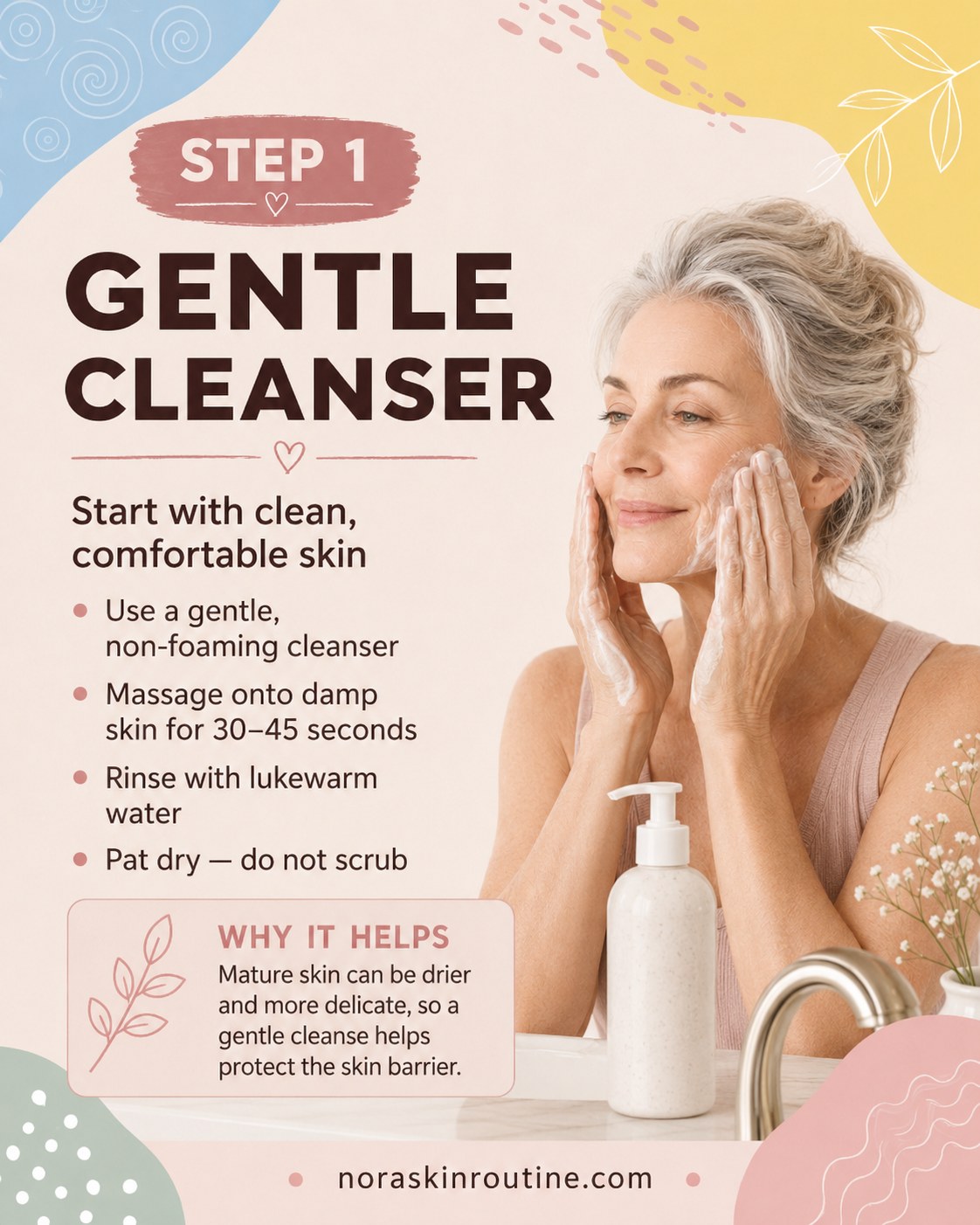
Mature skin tends to be drier and more delicate, so the first move of the day matters more than it might seem. A gentle, non-foaming cleanser removes overnight oil and sweat without pulling at the skin barrier, which is exactly what a foaming, sulfate-heavy formula can end up doing.
- Massage onto damp skin for 30 to 45 seconds
- Rinse with lukewarm water, never hot
- Pat dry with a soft towel instead of rubbing
If your skin feels tight right after rinsing, that is usually a sign the cleanser is too stripping for your current needs, and switching to a cream or milky texture can make a noticeable difference within a week or two.
Prep Skin With a Hydrating Toner or Essence
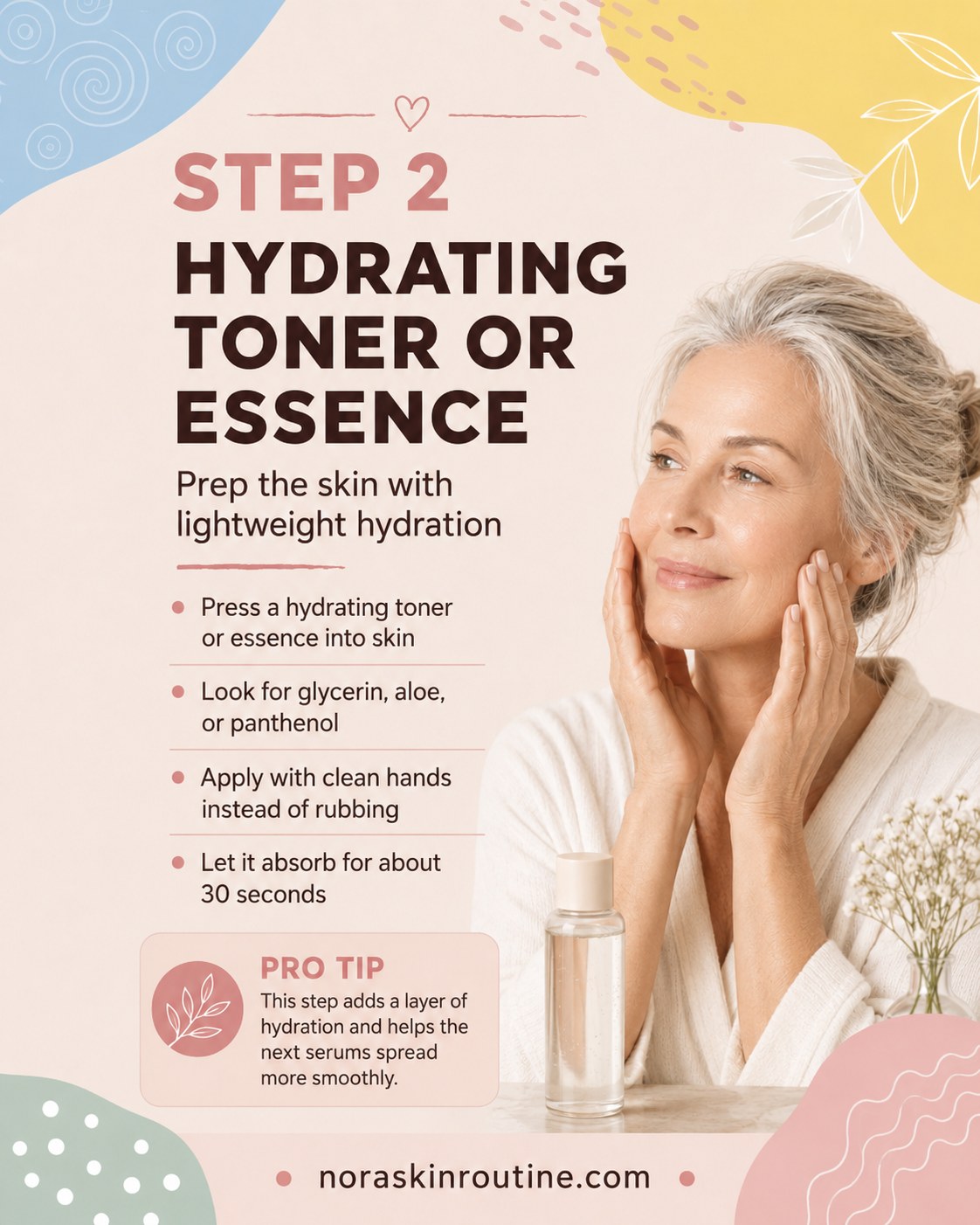
This step gets skipped often, which is a shame because it quietly does a lot of work. A hydrating toner or essence adds a light layer of moisture that helps everything applied afterward absorb more evenly rather than sliding around on dry patches.
- Press it into skin with clean hands rather than rubbing
- Look for glycerin, aloe, or panthenol on the label
- Let it absorb for about 30 seconds before continuing
In my editorial experience, this is the step most readers assume is optional — but it is often the one that makes serums perform noticeably better.
If your skin over 50 tends to feel tight by mid-morning, this quiet prep step is worth reconsidering before adding more expensive products elsewhere.
Brighten and Protect With a Vitamin C Serum
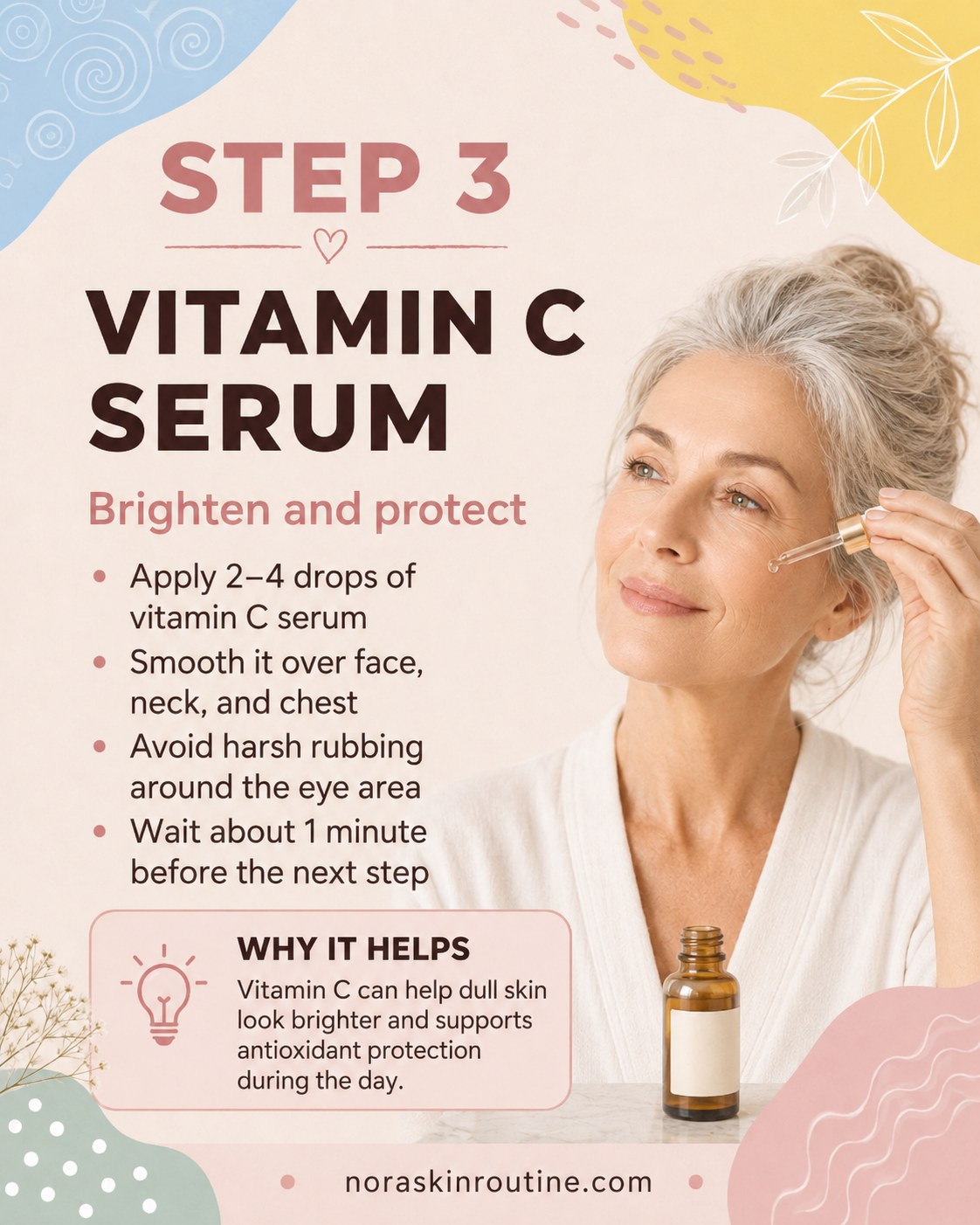
Once skin has some hydration on board, a vitamin C serum can help address the dullness that often becomes more noticeable with age. Consistency matters more than concentration here — a moderate strength used daily tends to work better than an occasional high-strength splurge.
- Apply 2 to 4 drops across face, neck, and chest
- Smooth it on gently, avoiding harsh rubbing near the eyes
- Wait about a minute before layering the next product
Vitamin C can also support antioxidant protection during the day, which is a nice complement to sunscreen rather than a replacement for it. If your skin is sensitive, patch testing on your neck first is a sensible precaution before applying it to your whole face.
Add Plumping Hydration With Hyaluronic or Peptide Serum
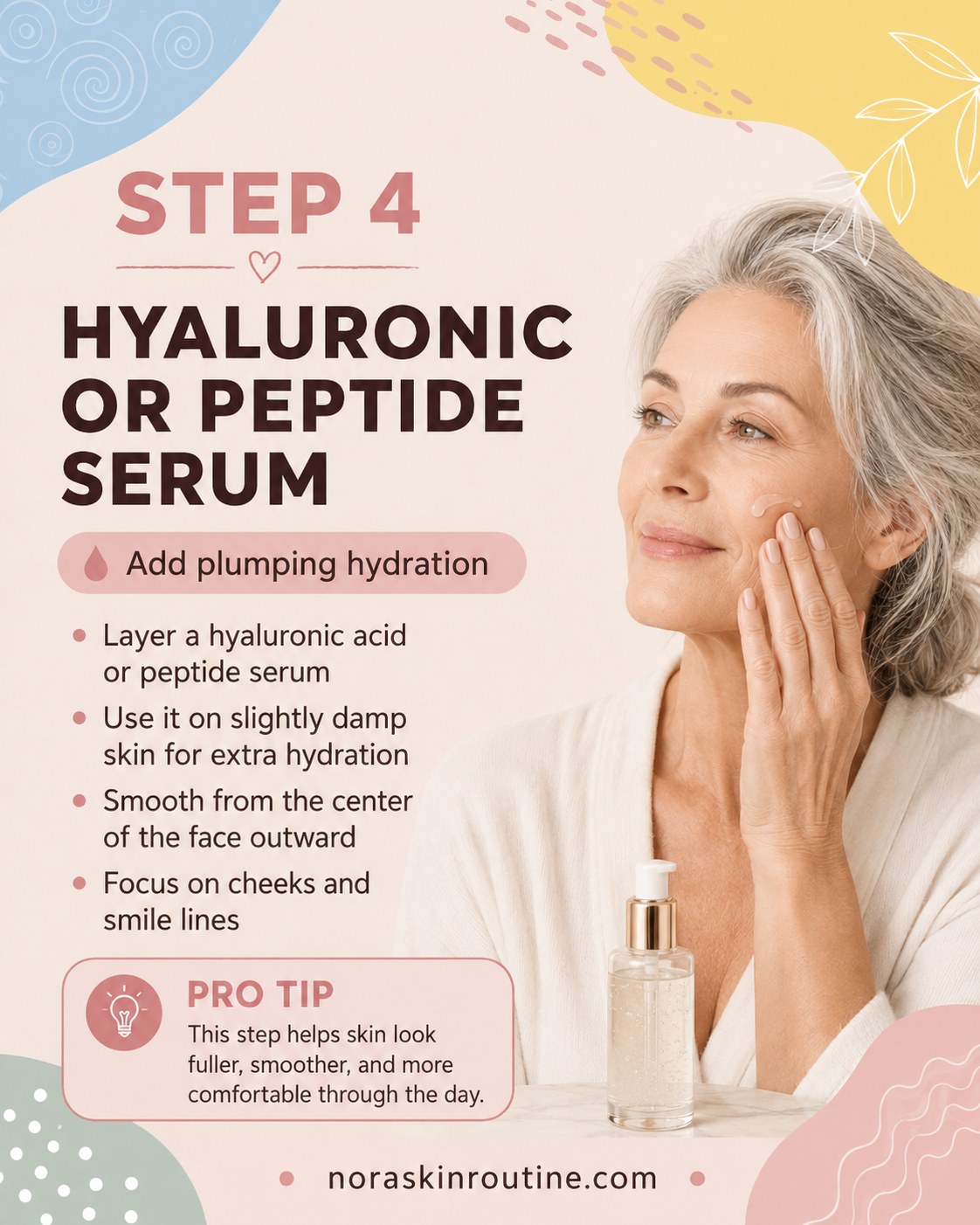
Skin over 50 often loses some of its natural bounce, and this is where a hyaluronic acid or peptide serum earns its place in the routine. Applying it to slightly damp skin can help draw in a little extra moisture rather than letting the formula sit on the surface.
- Smooth from the center of the face outward
- Focus on cheeks and smile lines, where skin often feels drier
- Layer underneath your moisturizer, not instead of it
Results here are gradual rather than dramatic — think smoother, more comfortable skin through the day rather than an overnight transformation. Depending on your skin, you may prefer a peptide-focused formula over pure hyaluronic acid if firmness feels like the bigger concern.
Treat the Eye Area With a Gentle Touch
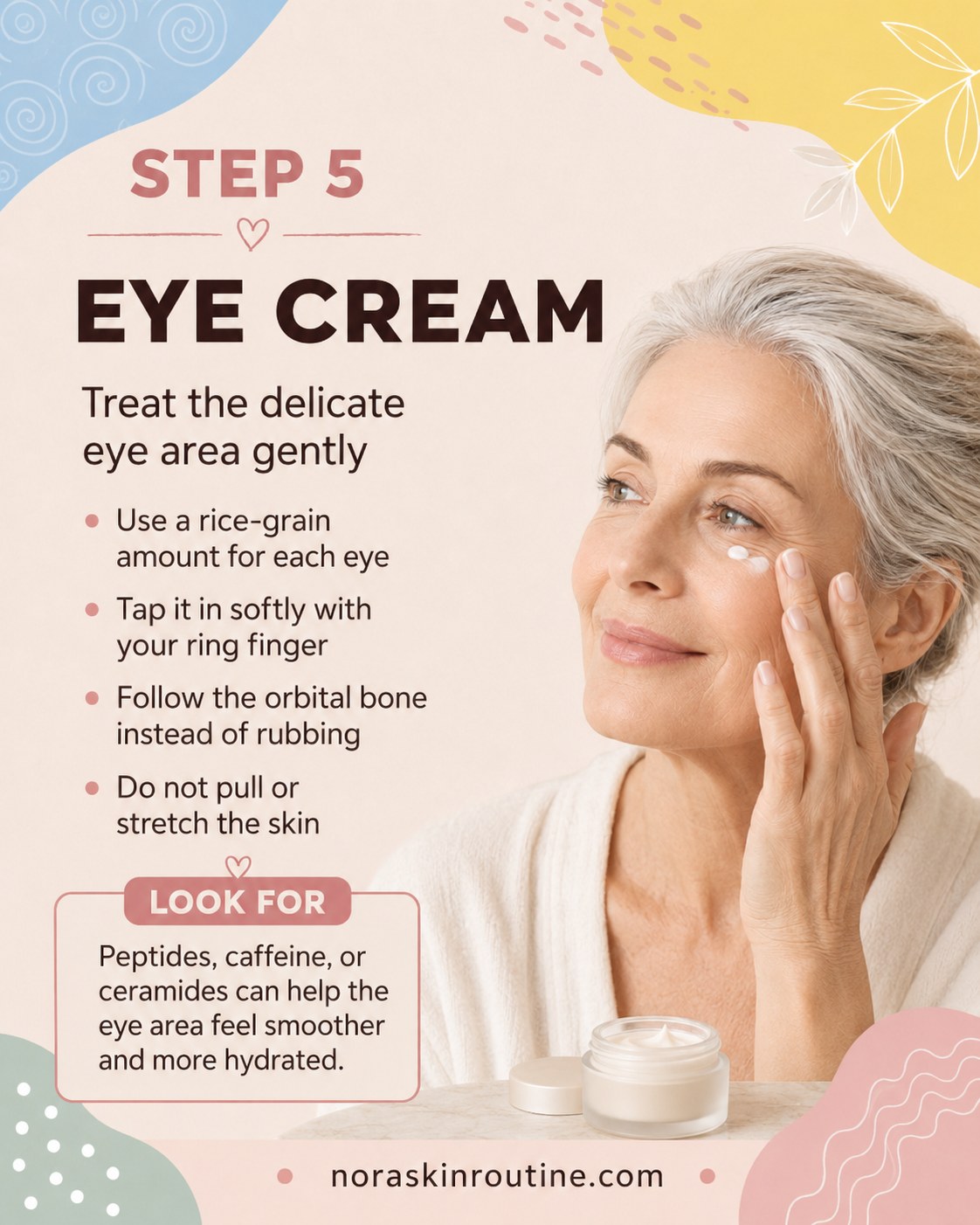
The skin around the eyes is thinner and more delicate than the rest of the face, which is why this step calls for a different technique rather than just a different product. A rice-grain amount per eye is genuinely enough, and more product will not necessarily do more good.
- Tap it in softly using your ring finger
- Follow the orbital bone rather than pulling toward the lash line
- Avoid stretching or dragging the skin
Look for ingredients like peptides, caffeine, or ceramides, which can help the area feel smoother and more hydrated over time. This is one habit I return to every morning, even on the days I am rushing out the door for a coastal walk.
Seal in Moisture With a Barrier-Supporting Moisturizer
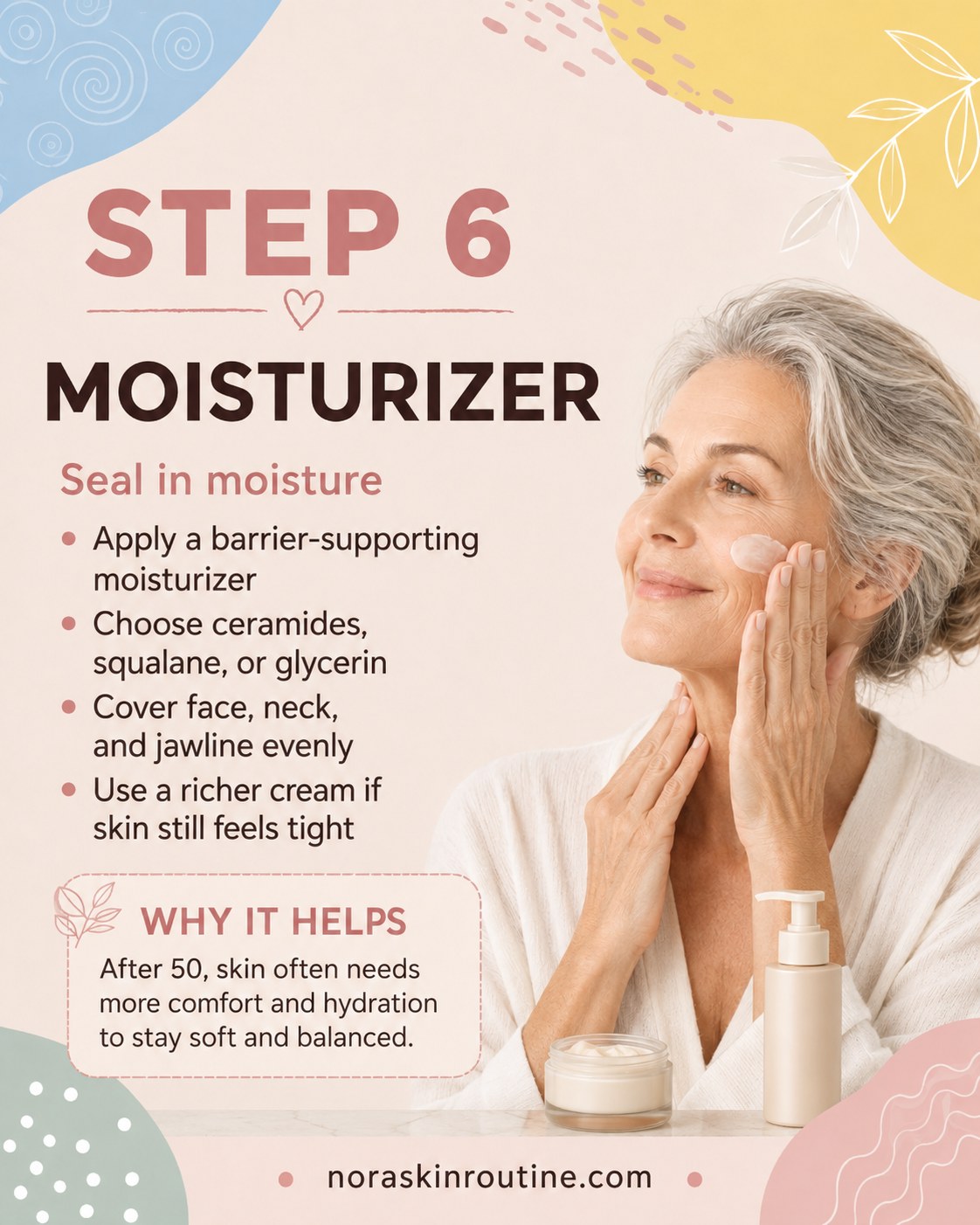
After 50, skin often needs more comfort and hydration simply to feel balanced through the day, which makes this step far from optional. A moisturizer built around ceramides, squalane, or glycerin helps support the skin barrier rather than just sitting on top of it.
- Cover face, neck, and jawline evenly, not just the center of the face
- Reach for a richer texture on days skin still feels tight after the lighter serums
- Give it a moment to settle before moving on to oil or sunscreen
If your skin still feels dry by midday even with a good moisturizer, that is usually a sign to size up in richness rather than add more products on top.
Boost Softness With an Optional Facial Oil
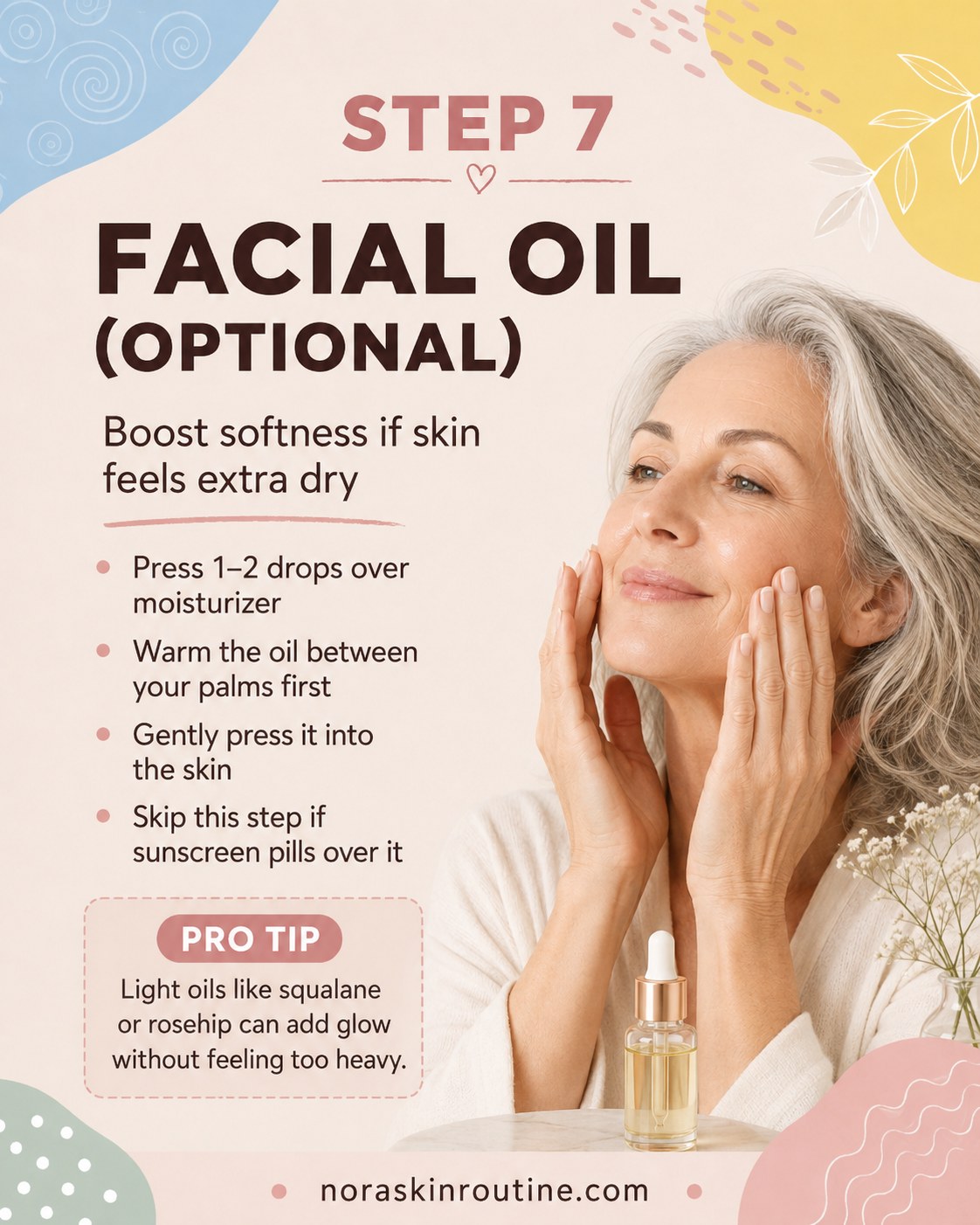
This step is genuinely optional, and that is worth saying plainly — plenty of women over 50 have perfectly comfortable skin without it. But on days skin feels extra dry, tight, or dull, one or two drops of a light oil pressed in over moisturizer can add a noticeable softness.
- Warm the oil between your palms first
- Press it into the skin rather than rubbing it in
- Skip it if your sunscreen tends to pill on top of oil
Lighter oils such as squalane or rosehip tend to add glow without feeling heavy, which matters if you also wear makeup afterward. I keep a small bottle by my vanity for the drier months and leave it out entirely in the warmer ones.
Finish With Broad-Spectrum SPF 30 or Higher
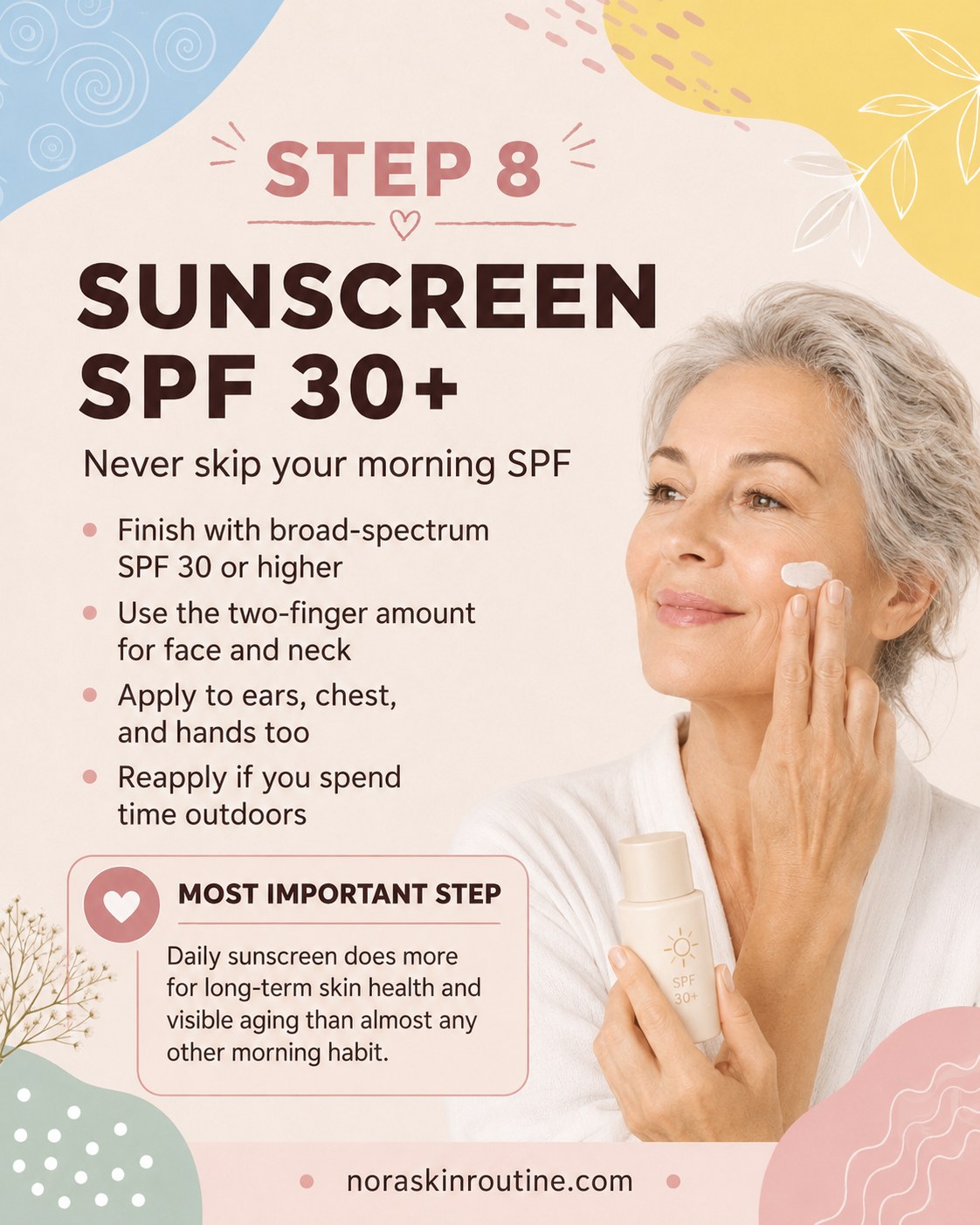
If you only take one habit from this entire routine, make it this one. Daily sunscreen does more for long-term skin health and visible aging than almost any other morning step, and that holds true whether your skin leans dry, oily, or sensitive.
- Use a two-finger amount for face and neck
- Extend it to ears, chest, and the backs of your hands
- Reapply if you are spending real time outdoors
Sunscreen is often the step people trim first when mornings feel rushed, but it is the one I would protect above all the others. Choosing a broad-spectrum SPF 30 or higher formula you actually enjoy wearing is far more useful than the most advanced serum applied without protection over it.
A morning skincare routine over 50 does not need to be complicated to be effective — it just needs to be consistent, gentle, and adaptable to how your skin feels on any given day. Some mornings you will move through all eight steps slowly with a cup of tea in hand, and other mornings you will keep it to the essentials before rushing out the door. Both versions count.




Frequently Asked Questions
Do I really need all eight steps every single morning?
Not necessarily. On busier days, a gentle cleanser, one hydrating serum, moisturizer, and sunscreen cover the essentials well. The extra steps like toner, eye cream, and facial oil can be added back in when your skin feels like it needs more support.
Can I use vitamin C and hyaluronic acid on the same day?
Yes, these two ingredients layer well together. Applying vitamin C first, letting it absorb, then following with a hyaluronic or peptide serum is a common approach that many mature skin routines rely on.
Is facial oil necessary if I already use a moisturizer?
Not for everyone. Facial oil is genuinely optional and mainly useful on days skin feels extra dry or tight. If your moisturizer already keeps your skin comfortable, you can skip the oil step without any real downside.
What SPF is appropriate for daily wear over 50?
A broad-spectrum sunscreen with SPF 30 or higher is generally recommended for daily use. If you are outdoors for extended periods, reapplying during the day is worth the extra minute it takes.